Lovers facing the world/facing the film in Atom Egoyan’s Calender 1993 and Jalal Toufic’s letters in 1999

Away from the cinema of the face, towards a cinema of facing.
The protagonist in Calendar 1993 is Atom Egoyan himself. Director, writer, and the one arranging the frames across planes, temporalities and geographies. Sometimes behind the camera, sometimes in front of it. Present and concealed at the same time.
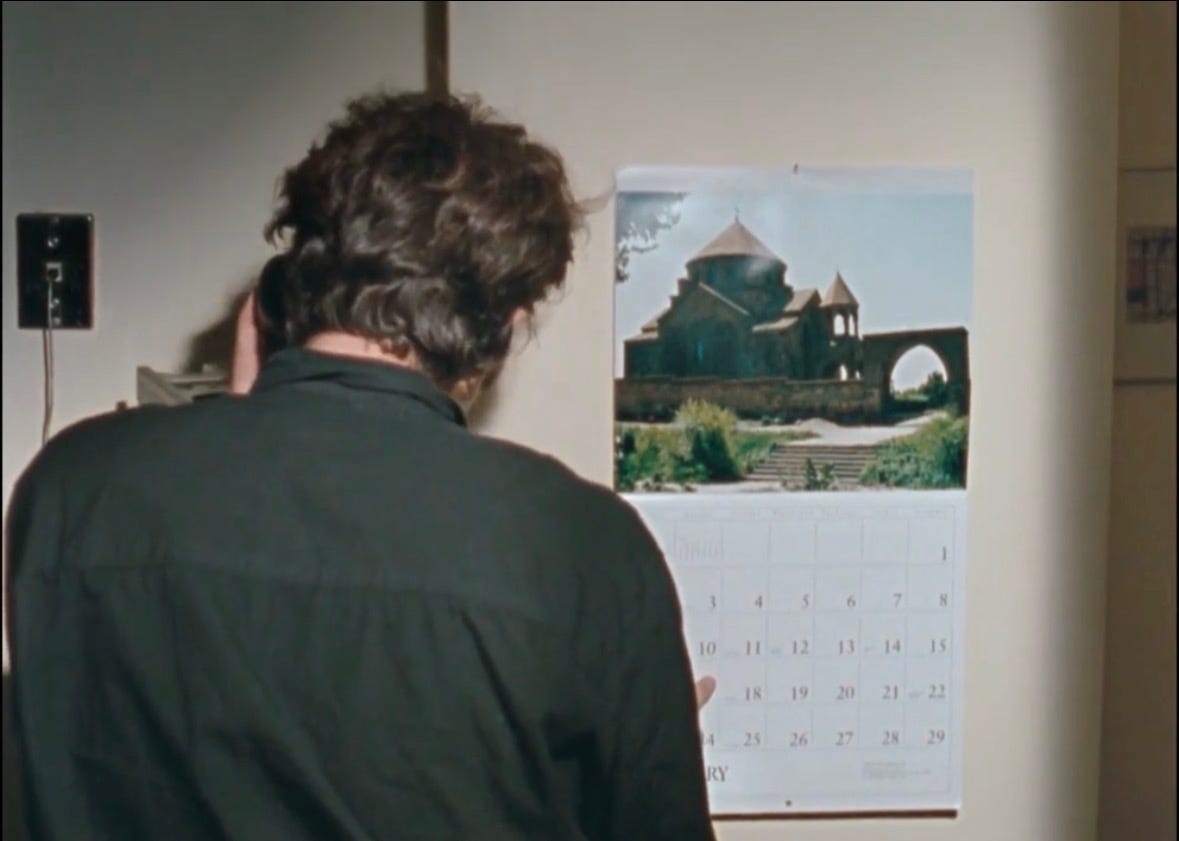
The film centers around a calendar of 12 pictures taken by Atom Egoyan during a trip to Armenia with his wife. Each image corresponds to a church and each church becomes a month.
These pictures involve acts of framing which begin with the frame of the calendar itself at his apartment in Toronto, empty of subjects in the present, only a slate for projecting time and memory. From there the film cuts to scenes in the past in Armenia where Egoyan, concealed behind the camera, is only present through his voice as he speaks to his wife and to the Armenian driver who addresses her in Armenian and whose words she then translates back to Egoyan.
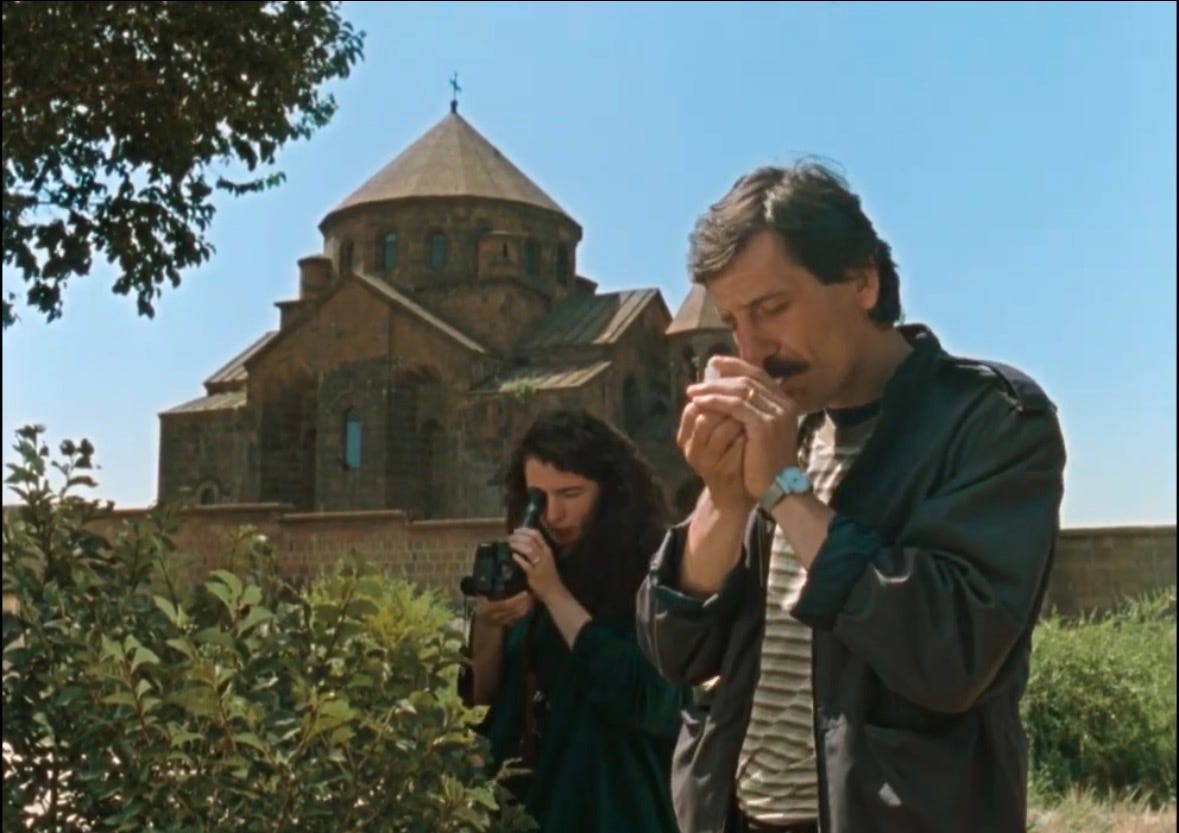
With the driver’s knowledge of the history of these sites and the Armenian language, the history passes through him to her and then from her to Egoyan. But Egoyan, behind the camera, keeps insisting that he is not really interested in this history. He is more interested in filming it, fixing it, getting the image. “I’m here to take pictures.”
In this instance Egoyan becomes the one writing history.
He appears to be facing the ruins of history but only through the apparatus, through the tripod, through the frame, through the mediation caused by his wife’s closeness to the driver through a language he doesn’t know. But he takes agency back as the writer, the one who waits to write.
While Egoyan ignores, his wife keeps leaving voice messages on his answering machine. The voice arrives but he does not answer it. He does not write back. The messages accumulate, forming another timeline of the relationship, one made only of voice.
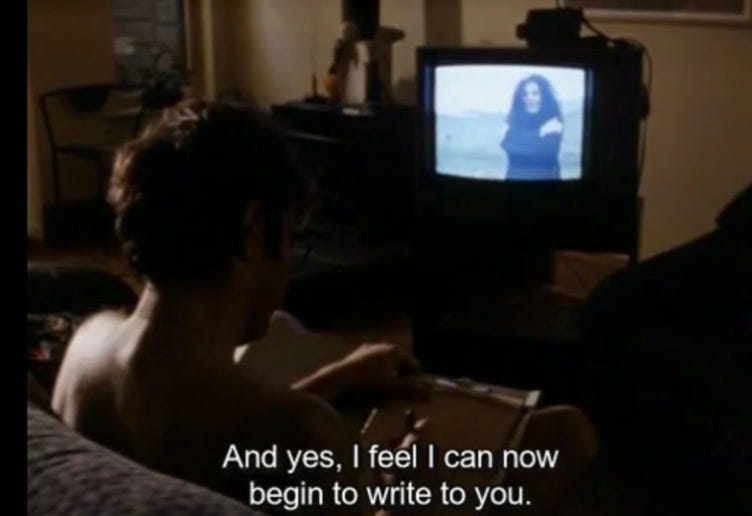
At one moment he sits alone in the darkness of his living room watching the videos they filmed in Armenia. The camera returns to the ruins, to the churches, to the moments that were already recorded. Only then does he say that this is the right moment to write to you.
“In my future letters to you, I will type everything except your name, using a speech recognition program to add it. My letters will thus be signed with my pronunciation of your name.” — Jalal Toufic 1999
Writing appears only after the return to the recorded past. The voice arrives first, through the answering machine, through the recorded images, through the apparatus. The name must be spoken before it can be written.
Back in the present in Toronto, Egoyan is no longer concealed behind the lens. He is having dinners with a different woman each month. With each flip of the calendar a new woman arrives, a new image of a church appears, and the memories behind it return to us. The dinners repeat month after month, each one linked to one of the twelve photographs of Armenian churches that make up the calendar. The calendar hangs there as the hidden structure of the film, the device that connects the dinners to the images of the past.
Egoyan sits with a new woman each time, but they are not facing each other. They sit next to each other and both face us.
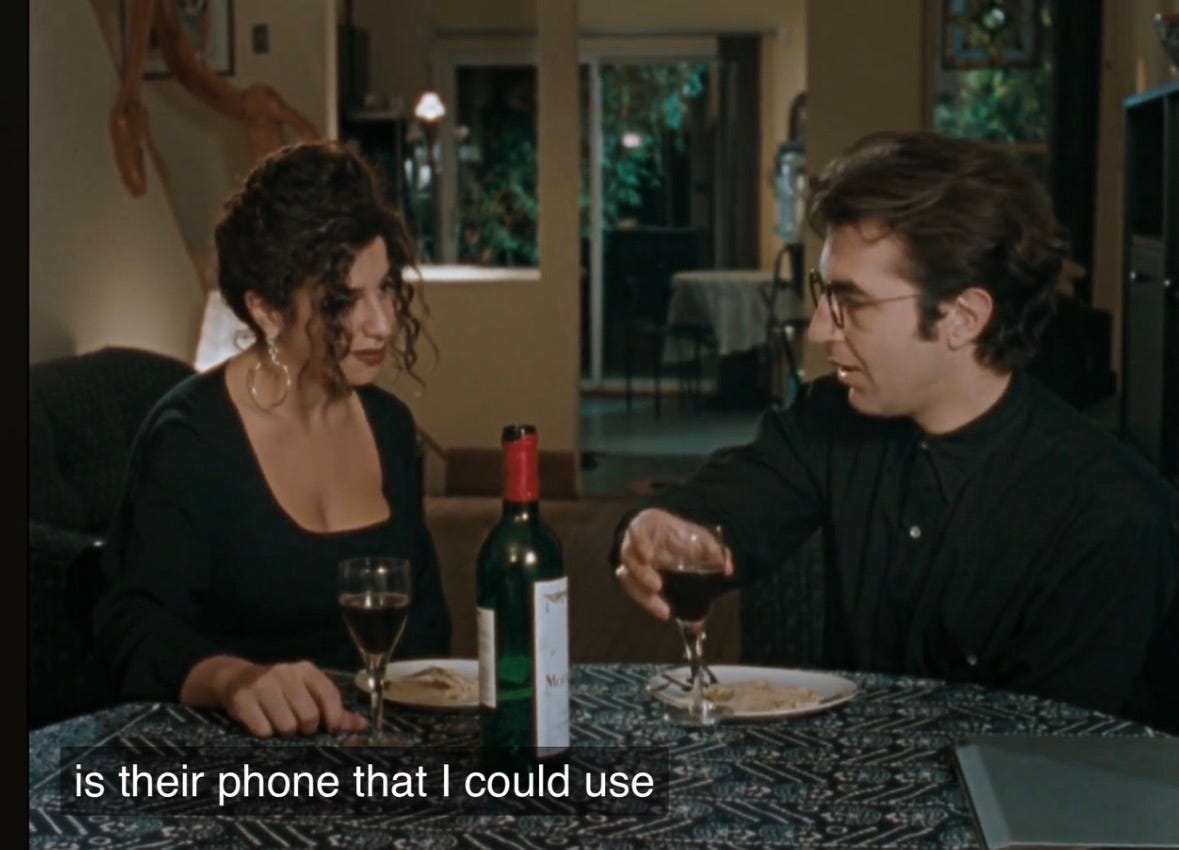
During these twelve dinners the women ask for the phone, which is placed next to the calendar. This moment happens when Egoyan pours the last glass of wine, emptying the bottle, signaling the end of the dinner and the beginning of intimacy. It is the moment when sex is anticipated, when intimacy appears scheduled to take place. But intimacy is displaced at the moment it is supposed to begin. The women pick up the phone and begin speaking to other lovers in languages he does not understand.
Egoyan doesn’t provide subtitles to these calls, further alienating and implicating us, the audience, in this space of broken intimacy and waiting. The calls carry an erotic tone of yearning. It is at the moment when intimacy is called for in the present that it is desired elsewhere. Jalal Toufic says that love is only possible in foreign lands.
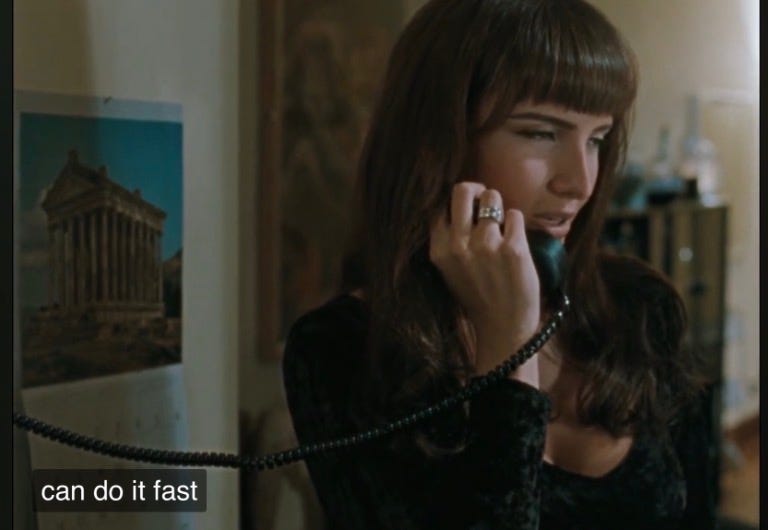
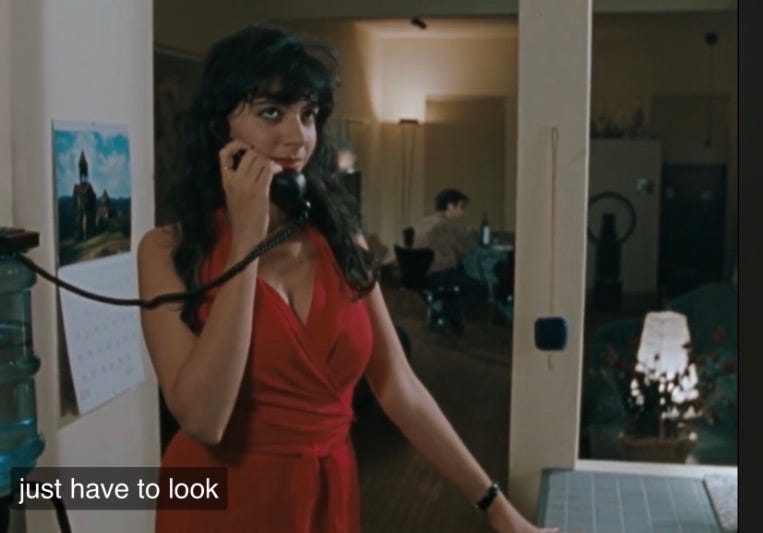
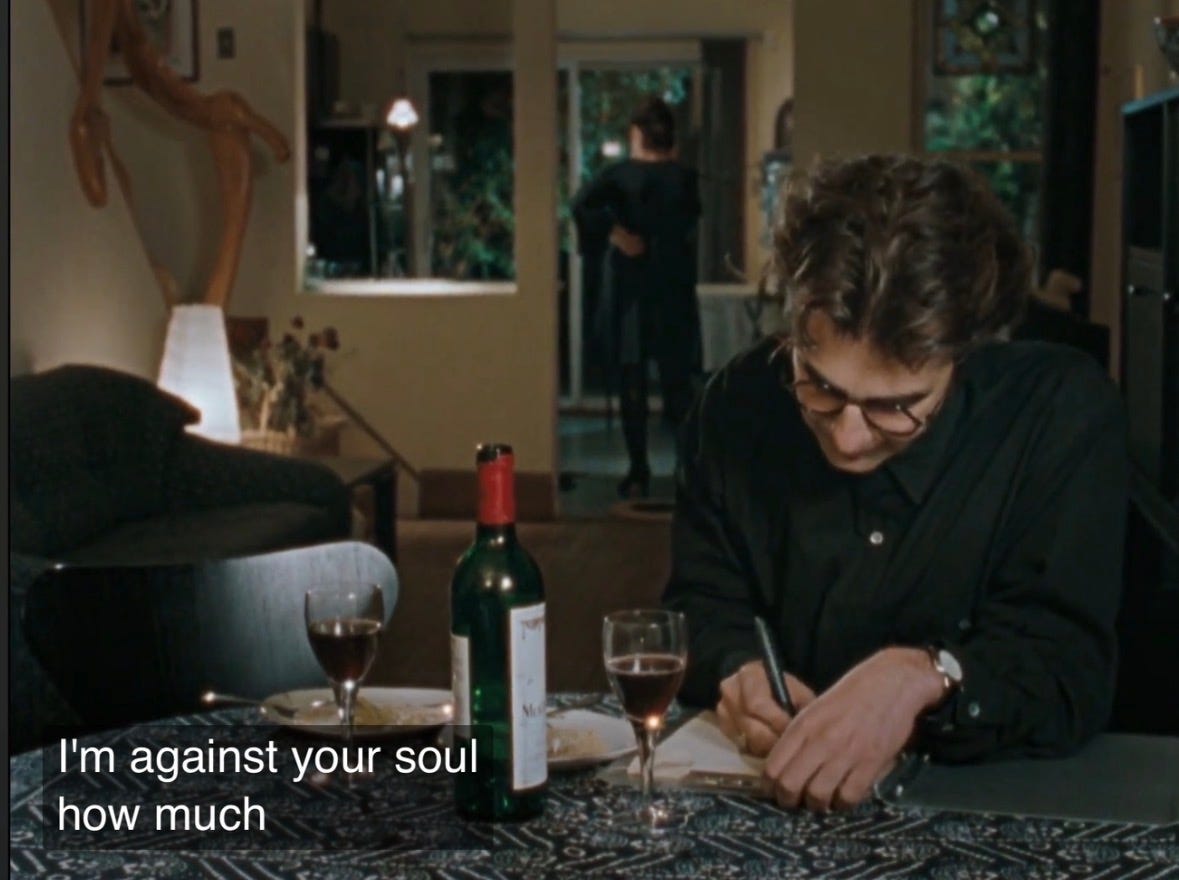
While the women go up to the phone next to the calendar, sex is replaced by writing. Egoyan takes out his writing pad. “Film is a diabolical sexed up writing pad.”
The calendar, which should be organizing time, instead begins to disrupt it. The call interrupts the scheduled moment of intimacy. Language, memory, the voice and its absence rearrange the scene. Intimacy moves elsewhere, into another language, another voice, while he remains with the page. Writing begins in the space left open beside the calendar, between the image of the church and the sound of the call.
“Two of the greatest cinematic love stories, Resnais/Duras’ Hiroshima mon amour and Marker’s La Jetée, take place against the back- drop of the destruction of the city and possibly of the world. Every love of a man and a woman takes place in seclusion from the world; every love of a man and a woman has for horizon the destruction of the world since they can restart the human race (this is one of the ways love is linked to death). Noah must be a great lover (a subject yet to be explored).” — Jalal Toufic, 1999
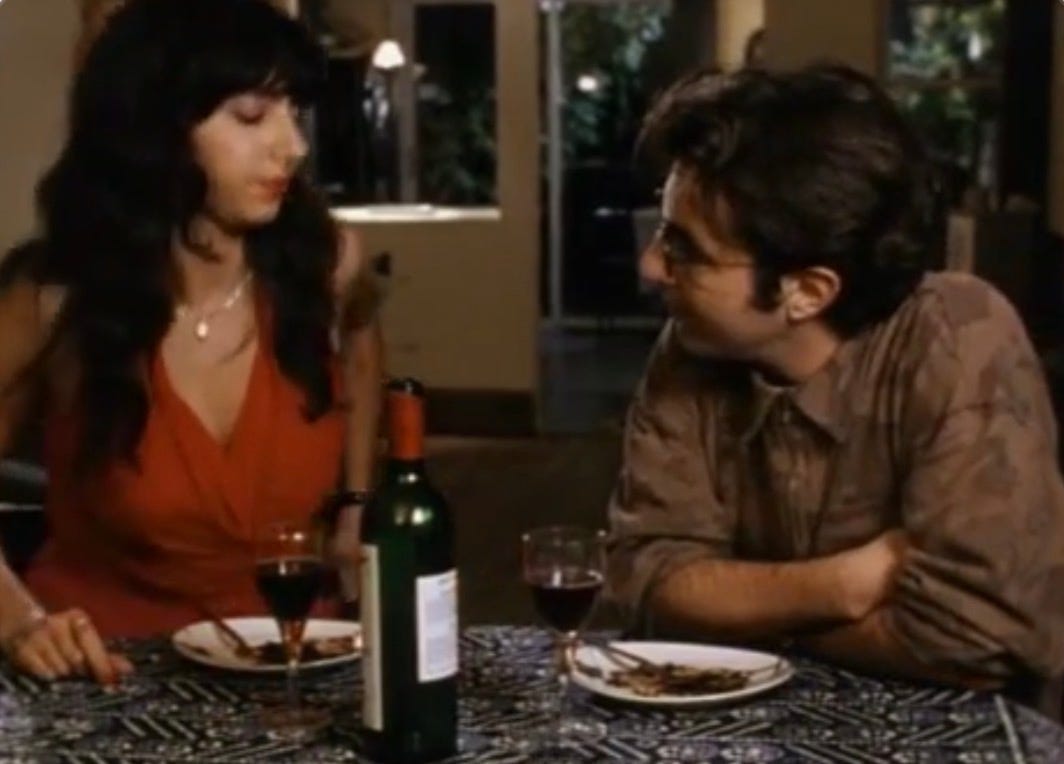
The lovers sit next to each other facing outward, the way lovers in Duras face the world. But here the gesture shifts. They do not withdraw into seclusion from the world; they face it directly. They face us, the audience, because they are the ones who make the picture.